Pension minimum relief extended to financial year 2021/22
On Saturday 29 May 2021, the Government unexpectedly announced an extension of the temporary reduction in superannuation minimum drawdown rates through to financial year 2021/22.
Read more

On Saturday 29 May 2021, the Government unexpectedly announced an extension of the temporary reduction in superannuation minimum drawdown rates through to financial year 2021/22.

The 2021-22 Federal Budget is a balancing act between a better than anticipated deficit ($106 bn), an impending election, and the need to invest in the long term.

Changes from 1 July 2021 will impact on how much money you can contribute to superannuation and how much you can have in your retirement phase superannuation account.

The Australian Taxation Office (ATO) has been concerned for some time about how many professional services firms are structured – specifically, professional practices such as lawyers, architects, medical practices, engineers, architects etc., operating through trusts, companies and partnerships of discretionary trusts and how the profits from these practices are being taxed.

The Government’s JobMaker scheme has created 609 new jobs since registrations opened on 1 February 2021, despite around 15,000 businesses registering their interest in the scheme.

Builders, electricians, plumbers, architects, real estate agents, security guards and other workers who hold an occupational licence in their home state or territory and who want to do the same work in another state or territory will soon be automatically deemed to have the necessary licence.
.jpg)
Super Retail Group - owner of the Supercheap Auto, Rebel, BCF and Macpac brands - handed back $1.7 million in JobKeeper payments in January after releasing a trading update showing sales growth of 23% to December 2020.

The first COVID-19 vaccination in Australia rolled out on 21 February 2021 preceded by a wave of protests. With the rollout, comes a thorny question for employers about individual rights, workplace health and safety, and vaccination enforcement.
.jpg)
Fringe benefits tax (FBT) is one of Australia’s most disliked taxes because it’s cumbersome and generates a lot of paperwork. The COVID-19 lockdowns have added another layer of complexity as many work patterns and behaviours changed.

Yarra Ranges Tourism operators are able to have their business listed for 12 months on Victoria's official travel website for FREE.

With the borders between the State and Territories all but open and 2021 well underway, there is a hunger for a return to ‘normal’. The
recent Westpac-Melbourne Institute Index of Consumer Sentiment articulates this desire to ‘get on with things’; sentiment reached its
highest level since November 2013.
However, the Reserve Bank of Australia cautions that the recovery will be uneven and drawn out and GDP is not expected to return to
pre-pandemic levels until the end of 2021. The risks are not limited to the pandemic but Australia’s geopolitical relationships, notably
with our largest trading partner, China.

The impact of COVID-19 has been felt very differently from region to region. Fortunes vary wildly between business operators subject to ongoing lockdowns and trading impediments to those benefiting from the “new normal”.

We’re often asked the best way to sell a business. There are two key components at play in the sale of a business; structuring the transaction and positioning the business to the market. Both elements are important and can significantly impact your result.

Applications for the Victorian Government’s Sole Trader Support Fund closes 30 December 2020. Non-employing sole traders that operate from a premises that is not their residence can apply for a grant of $3,000.

The Tax Office has announced that the completion of the December business monthly declaration, for employers to be reimbursed for JobKeeper payments between 23 November 2020 to 3 January 2021, has been extended from the usual lodgement date of the 14 January 2021 to 28 January 2021.

The 2020/21 State Budget was released on the 24 November 2020. The Government states that this is the Budget to repair, recover, and make us stronger than before. It delivers an infrastructure investment to drive the State’s recovery, with its centerpiece an ambitious Jobs Plan aimed at creating 400,000 jobs by 2025.

The countdown to Christmas is now on and we're in the midst of the headlong rush to get everything done and capitalise on any remaining opportunity before the Christmas lull. Busy period or not, Christmas causes a period of dislocation and volatility for most businesses. This dislocation and volatility mean that it is not 'business as usual' and for many businesses, it is the change that causes the problem.

Now, more than ever, business operators should have a plan in place to manage during uncertain times. Even if your business is not
directly impacted, it’s likely your customers, your supply chain, and your workforce will be to some extent.
So, how do you plan for uncertainty when every assumption is subject to change?

The 2020-21 personal income tax cuts announced in the Federal Budget are now law. Employers need to ensure that the tax withheld from employee salaries is correct.

We’ve had quite a few questions about the JobMaker hiring credit announced in the 2020-21 Federal Budget. The legislation enabling the JobMaker scheme has not passed Parliament as yet and until this occurs, the JobMaker rules are not certain and may change.

Stimulating investment is high on the Government’s agenda. To encourage spending, the 2020-21 Budget introduced a measure that allows businesses with turnover under $5bn to immediately deduct the cost of new depreciable assets and the cost of improvements to existing assets in the first year of use.

If your company has made a loss, you may be able to claim a tax refund for tax previously paid on profits.

The 2020-21 Federal Budget is a road to recovery paved with cash.
Key initiatives include:

The first tranche of JobKeeper ended on 27 September 2020. We look at the issues for those seeking to qualify for the second tranche of JobKeeper and for those no longer eligible.

This week, the Victorian Government announced a third round of support packages – ensuring businesses impacted by coronavirus (COVID-19) restrictions continue to receive the support they need to make it through restricted trading.

Facebook have announced a USD 100m grants programme to support businesses that may be experiencing disruptions resulting from the global outbreak of COVID-19.

The first tranche of JobKeeper ends on 27 September 2020. Those needing further support will need to reassess their eligibility and prove an actual decline in turnover.

Over the past few months, Fair Work have been continually updating the resources on their website to keep up with the ever changing landscape of Coronavirus changes to work places.

An essential update on the current state of play of COVID-19 stimulus and support measures across Federal and State/Territory initiatives for business and individuals.

From 28 September 2020, the second tranche of the JobKeeper scheme changes the eligibility tests for employers and employees, and the method and amount paid to eligible employees.

In this state of emergency and pandemic situation, timely notification of potential workplace transmission of COVID‑19 is critical for efficient and effective management of related health and safety risks, and the prompt investigation of potential breaches of employer duties.

An employment termination payment (ETP) is a lump sum payment made to an employee when their job is terminated.

From 1 July 2020, parents accessing the Government’s parental leave pay (PPL) scheme will have greater flexibility and options.

An increase to the minimum wage of 1.75% started rolling out for the first full pay period from 1 July 2020.

We always knew that a Government scheme swiftly distributing cash during a crisis was going to come with equally swift compliance and review measures, particularly when eligibility was self-assessed. Two major Australian Taxation Office (ATO) initiatives are searching out fraud and schemes designed to take advantage of the Government’s Coronavirus Economic Response Package.

Will the Prime Minister's targeted $250 million package of funding to support cultural and creative projects and initiatives save the industry?

On the 21 July 2020, the Government announced the future of JobKeeper and JobSeeker along with other income support measures.
We've summarised the key details to help you with the changes.

With the reinstated Stage 3 'Stay at Home' restrictions in place across metropolitan Melbourne and Mitchell Shire, the Government have
introduced an initiative to support affected Businesses with a one-off $5,000 grant.
Applications for the program close on 19 August 2020.
The program is in addition to the first round of the Business Support Fund, which closed on 1 June 2020.

A windfall of hundreds of millions of dollars is waiting to be claimed by Victorians in long-lost wages, rental bonds and share dividends.

On 5 May 2020, the Victorian Government confirmed that any eligible Commonwealth Government JobKeeper Payments to meet the $1,500 threshold
will not affect the calculation of the WorkCover premium.
These changes are to support Victorian employers during the uncertainty of the
coronavirus pandemic.

The company tax rate will reduce to 26% for small and medium businesses from 1 July 2020.
The July change is part of a larger progressive plan to reduce the company tax rate to 25% from 1 July 2021.

Another End Of Financial Year is upon us! This means that once you have run your last pay run for the 2020 financial year, it is time to finalise payroll. Now that you are reporting under the Single Touch Payroll (STP) system, you need to complete the STP finalisation process in your software, rather than preparing year end payment summaries (group certificates).

The Government has announced grants of $25,000 to encourage people to build a new home or substantially renovate their existing home.

One of the most common questions we are receiving in the last few weeks, is how to allocate the new income amounts received under the Governments COVID-19 stimulus packages, in your accounting software. Regardless of which software you use, the treatment will be the same:

The JobKeeper subsidy has progressed beyond the rush for eligibility and entered its second phase: compliance. Late last month, the Australian Taxation Office (ATO) released guidance highlighting where the regulator will focus its compliance resources.
Monthly declarations of your current and projected GST turnover are due within fourteen days of the end of each relevant month.
It’s important to ensure that you have paid eligible JobKeeper staff at least $1,500 during each JobKeeper fortnight.

The ATO today updated their position on cash v accruals for JobKeeper - taking a much stauncher position.

The JobKeeper payment is a subsidy of $1,500 per fortnight per eligible employee paid in arrears to the employer by the ATO. It’s for
businesses that have suffered a detrimental decline in business because of COVID 19 to help keep their staff employed.
Here’s a summary of what you need to do to claim JobKeeper payments for April. If these conditions are not met, you might still qualify for
JobKeeper payments later in the year.
Following the passage of legislation through Parliament, we have produced a comprehensive guide to the COVID-19 Stimulus & Support Measures for our clients.

A subsidy of $1,500 per fortnight per employee, administered by the ATO, will be paid to businesses that have experienced a downturn of more than 30% (50% for businesses over $1bn).

The Victorian Government has announced new measures to contain the spread of coronavirus (COVID-19). They come into force at midnight
tonight 25 March 2020.
They have already ordered the closure of hotels, pubs and clubs (excluding bottle shops within those venues), casinos, cinema, nightclub,
entertainment venues, gyms and indoor sporting centres.
There are now further closures of non-essential businesses, limitations on certain activities, and closure of a range of venues, attractions
and facilities where large numbers of people would otherwise be in close proximity.

The Government yesterday released a second, far reaching $66.1bn stimulus package that boosts income support payments, introduces targeted changes to the superannuation rules, provides cash flow support of up to $100,000 for small business employers, and relaxes corporate insolvency laws.

One of the most common questions we have received from clients this week is “what are employers obligations in regards to the coronavirus
pandemic”.
Thankfully Fairwork have released some guidelines and likely scenarios for employers. It is a fantastic resource and is being updated
constantly, as this is a new area of law that hasn’t previously been written, so please check back on it regularly over this time.
The resource can be found at https://www.fairwork.gov.au/about-us/news-and-media-releases/website-news/coronavirus-and-australian-workplace-laws

The Government has announced a $17.6 billion investment package to support the economy as we brace for the impact of the coronavirus.
The yet to be legislated four part package focuses on business investment, sustaining employers and driving cash into the economy.
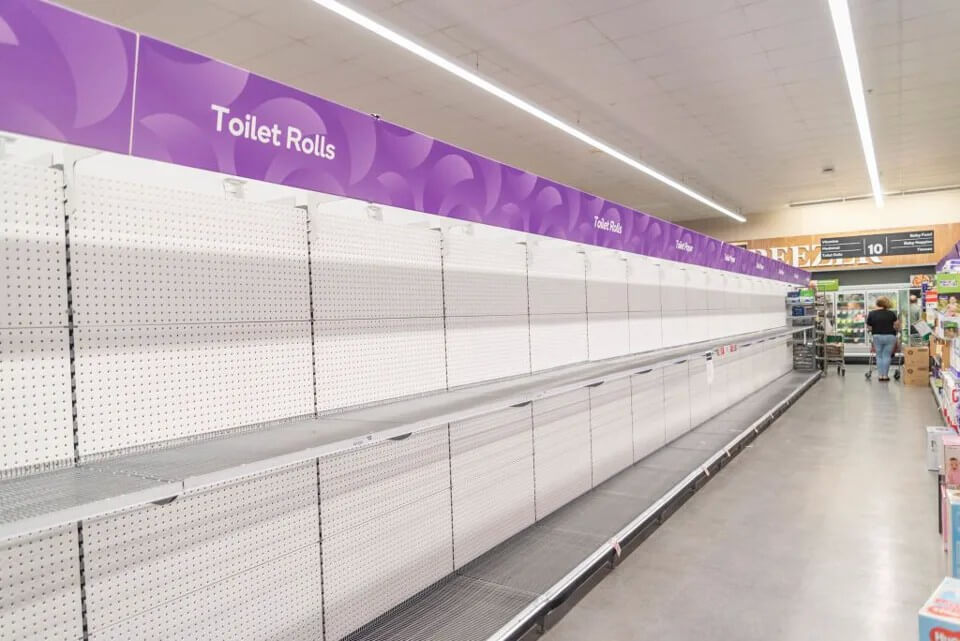
Empty restaurants and retail stores were one of the first signs of the devastating impact the coronavirus on Australian businesses.
Within a few months, the virus, now called COVID-19, has gone from being a largely unknown medical condition to one that threatens to impair
Australian and global economic growth.
We explore the impact on business and the importance of planning for setbacks beyond your control.

More than a third of all Australians have more than one superannuation account. Moving house, changing jobs or just forgetting to update your details can easily separate you from your superannuation fund.
.jpg)
For a while now, the Australian Taxation Office (ATO) has been concerned about tax deductions individuals have been claiming for a whole host of expenses. The latest on their ‘hit list’ are home office expenses. We guide you through what you can and can’t claim if you work from home.

A new system alerting SMSF trustees of changes made to their SMSF will roll out this month. The ATO will alert trustees by text and/or email when changes are made to bank details, electronic service address of the fund, the authorised contact and members.

The ATO has requested insurance policy information from 30 insurers for lifestyle assets such as yachts, thoroughbred horses, and fine arts.
The review, expected to impact 350,000 taxpayers, reaches from the 2015-16 to 2019-20 financial years, revealing assets that previously may
not have been disclosed or underreporting of income.
Whatever your requirements, we can help you find the solution.